

Hori
Description:
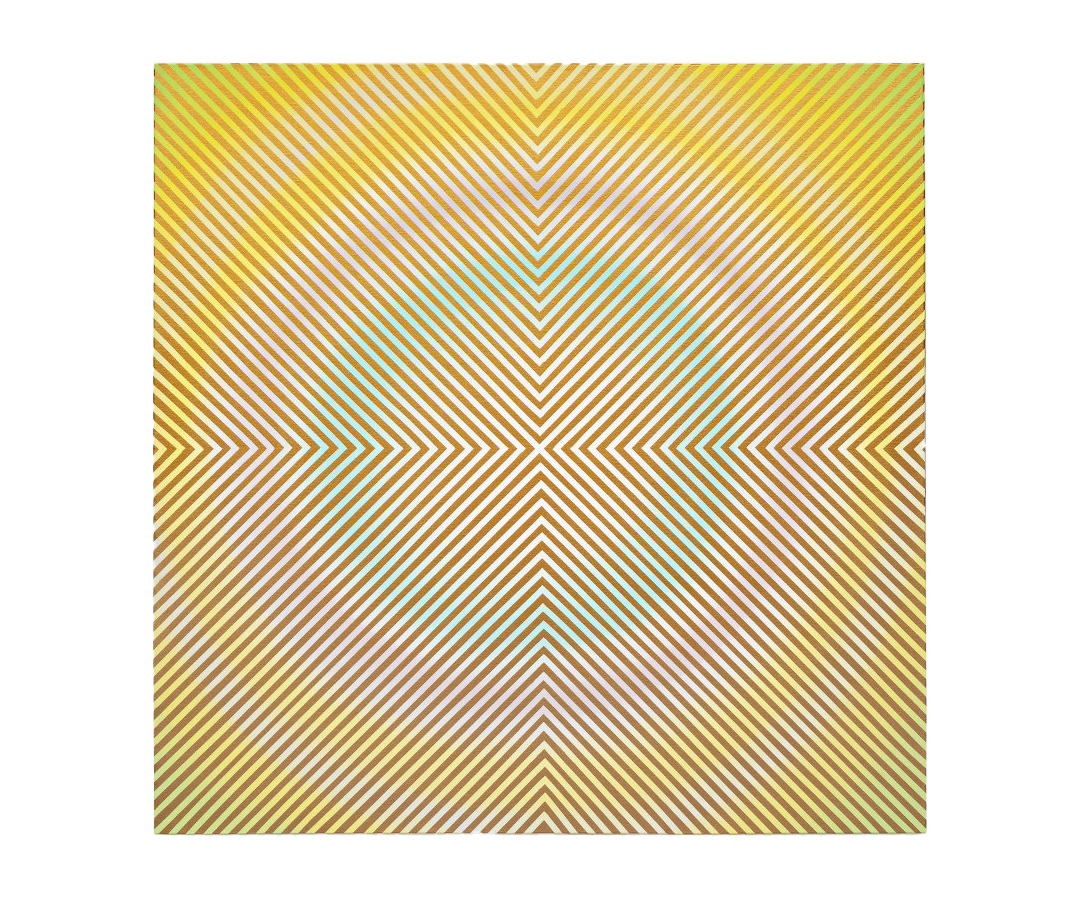
Daiara Tukano (1982, São Paulo, Brazil) is an artist, activist, and researcher of the ancestral knowledge of her people, the Tukano, from the Upper Rio Negro region of the Amazon. She carries forward their cosmology and visual mythology through her work. The daughter of Álvaro Tukano—one of the most prominent political leaders in the movement for the defense of Indigenous peoples’ rights—she frequently draws inspiration in her artistic practice from her own dreams and from visions induced by the Indigenous medicine ayahuasca. Hori (which means ‘vision’ in the Tukano language) is a work from the series of the same name, begun in 2013, in which painting is not merely representational but also an act of knowledge and resistance, a way to reactivate the bond between the human and the non-human, between communal memory and the struggle against the environmental and cultural destruction of the Amazon. The surface of the work becomes a portal—a ceremonial space inviting viewers to perceive the presence of the unseen and to feel the continuity between spirit and matter. By gazing intently at the work for a few seconds, the geometric motifs and vibrant colors seem to move, pulse, or create a sense of three-dimensional depth. This visual experience induces a form of vision, echoing the perceptual states reached through the use of caapi—better known through the decoction made from it, ayahuasca—which has psychoactive effects on those who consume it. This medicine lies at the origin of the knowledge, history, language, songs, and designs of the Tukano people. The artist’s work thus presents itself as a painting-device, in which intense colors, fluid lines, and symbolic geometries activate an alternative mode of perception—one that invites viewers to approach the artifacts held in the MUCIV collections with a renewed gaze. ML