

The Digger
Description:
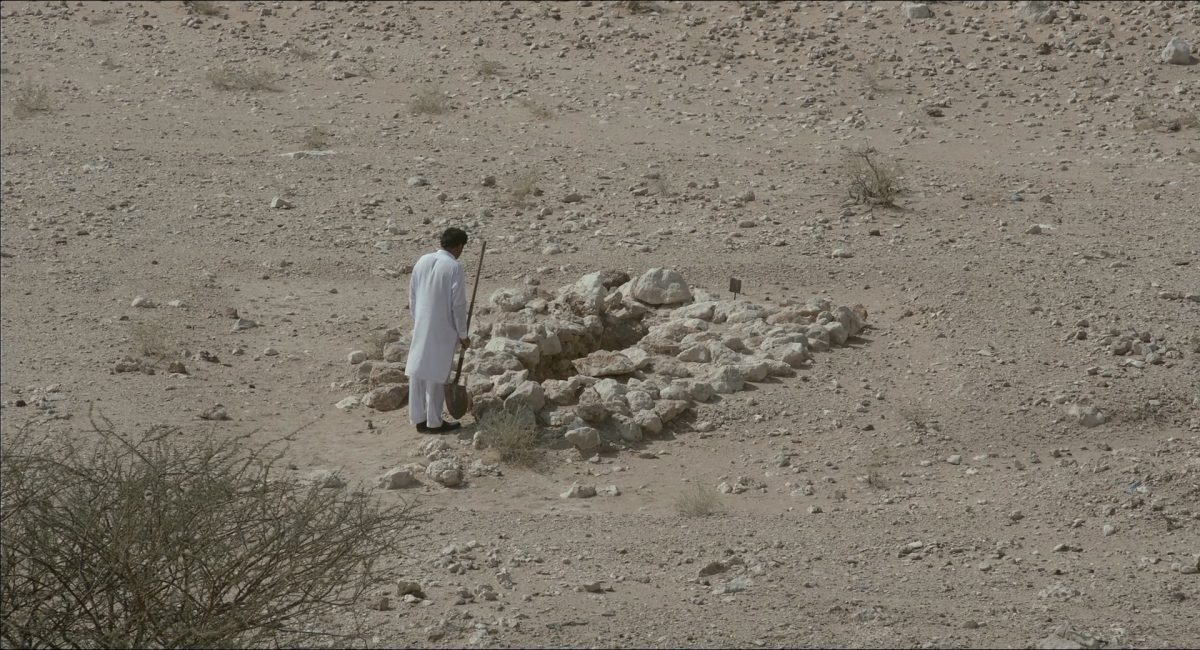
Ali Cherri (Beirut, 1976; lives and works between Beirut and Paris) films the daily life of Sultan Zeib Khan, a Pakistani keeper and excavator, who for twenty years has worked within the archaeological excavation missions of the emirate of Sharjah (United Arab Emirates). To be precise, the work is located in Neolithic necropolis of Jebel al-Buhais, which consists of burial sites that cross various periods of human settlements in the territory: Stone age, Iron age, Bronze age, up to the Hellenistic period. The more recent tombs, such as those of the Wadi Suq culture, are built on the surface with mounds or articulated stone compositions. A sense of expectation pervades the film, which oscillates between the excavations and the museum installations built around the findings, marked by the sole presence of Sultan and his movements between the construction of an archaeological narrative and the oblivion to which the desert seems retake all. Even the contemporary cities of Abu Dhabi and Sharjah may be glimpsed, but only as holograms in the background, obscured by the heat that surrounds them, and less tangible even than the burials that recall past lives in the form of skeletons, tools, and other objects that populate the displays of the museum that has no public. The connection with the rooms dedicated to the prehistoric collections of the Museum of Civilizations establishes a possible transnational link, bringing out the timeless dimension of the archaeological excavation and proposing a moment of shared reflection on the concept of civilization, starting from the subjects and authors of its foundation and, more generally, on the anthropocene and its contemporary musealization. ML