

The Return of a Lake
Description:
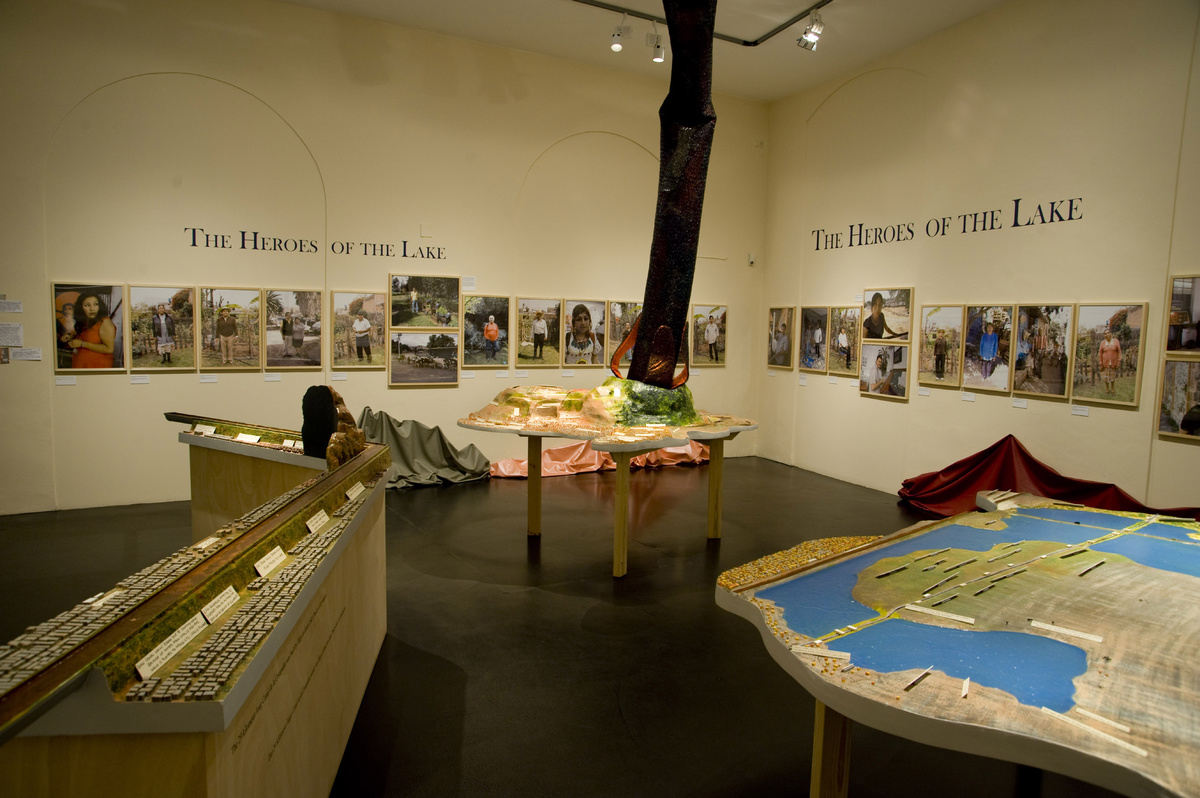
Maria Thereza Alves’s The Return of a Lake is an installation that interweaves art, decolonial thought, and environmental justice in a reflection on the reconstruction of an ecosystem destroyed by colonial actions—an ecosystem that continues to resurface in both memory and landscape. The project originates from the history of Lake Chalco in the Valley of Mexico, a natural basin drained during the dictatorship of Porfirio Díaz (1876–1911) to facilitate urban and agricultural expansion, a process that particularly enriched Íñigo Noriega Laso (1853–1920), the Spanish entrepreneur responsible for the expropriation of Indigenous lands. This act stands in symbolic continuity with the conquest led by Hernán Cortés, who in 1521 destroyed the Aztec island city of Tenochtitlán, filled in its canals, and replaced the agroecological techniques of the chinampas with colonial methods. In 1984, after decades of exploitation through the construction of numerous wells intended solely to support the expansion of Mexico City, the lake ‘returned,’ rising again from ground that had sunk more than twelve meters—as if reclaiming its presence and ecological memory. In Alves’s work, these events become dioramas animated by natural elements that take on a voice: the lake, the Río de la Compañía canal, the island with its volcano. In counterpoint, the figure of the colonizer Noriega Laso appears, evoked amid the flames of hell, alongside the museums in Spain and Mexico that continue to commemorate him—symbols of the dominant narratives the artist seeks to dismantle. Through participatory research, Alves restores a voice to the Nahua community of Xico, who still preserve the memory of the lake as part of their cultural identity, including through the activities and archaeological findings of the Museo Comunitario de la Valle de Xico. The Return of a Lake thus becomes both poetic and political: an invitation to rethink landscape as a historical and living entity, where the past resurfaces and nature retains a force of resistance. ML